
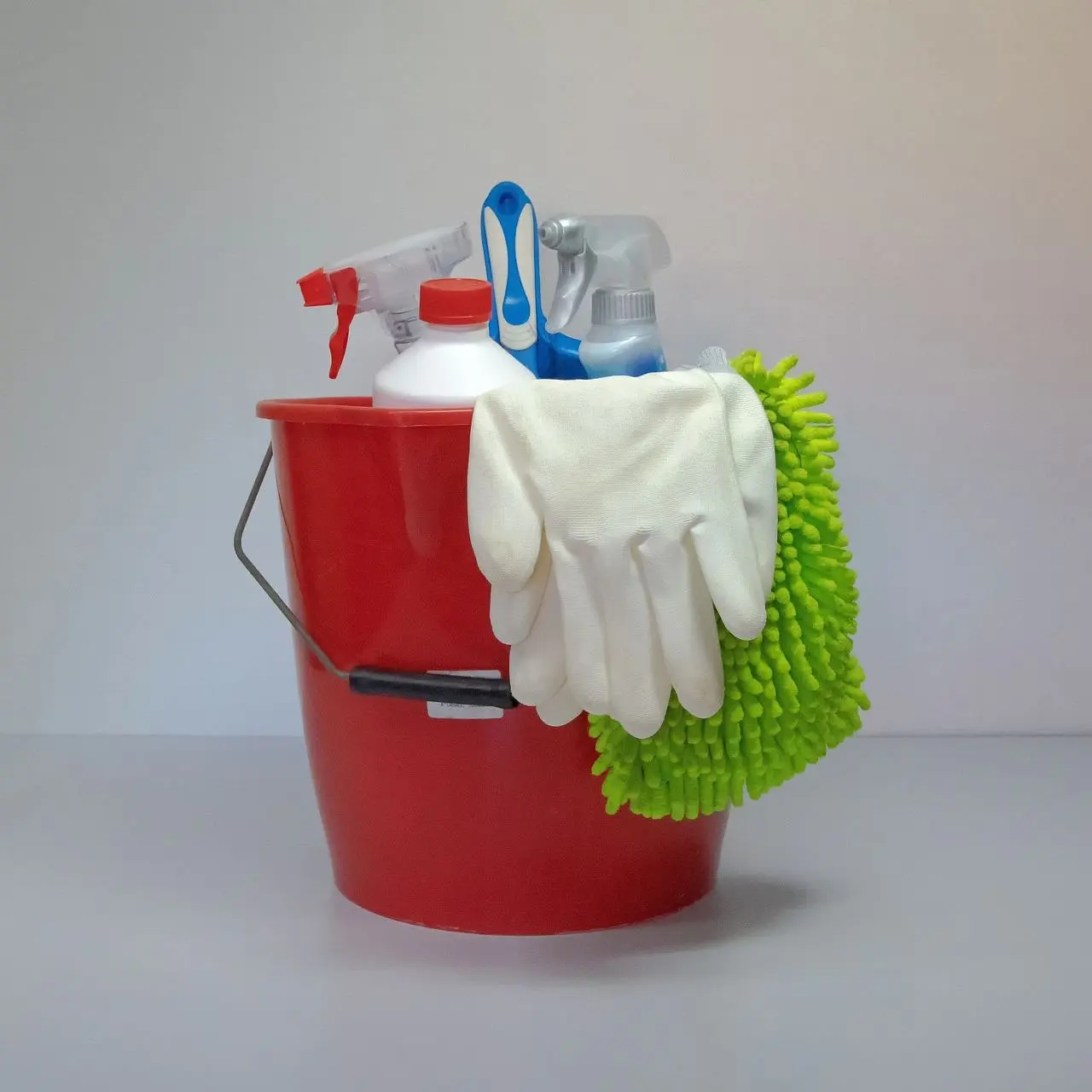
Wondering where to start with cleaning tips that keep your home fresh and safe? Read the label, open a window and never mix products. Stains, odours and routines all build on those habits.
| Item | Value |
|---|---|
| Health Canada bleach advisory, last updated | 2021-02-08 |
| Bleach mixed with ammonia | Toxic chloramine gas |
| Bleach mixed with acids such as lemon juice or vinegar | Chlorine gas |
| Hydrogen peroxide mixed with vinegar | Toxic fumes and corrosive acid |
| Poison Centre chloramine reports, October and November 2020 against the same months in 2019 | More than double |
These figures come from Health Canada’s public advisory and the Alabama Department of Public Health. Agency guidance can change, so check the sources before you rely on them.
Start with the label, fresh air and gloves
Before any method, routine or stain remedy, the habit that matters most is to read the product label. Health Canada’s advisory, last updated 2021-02-08, tells people to always read and follow the directions on product labels, and it repeats that point as its main action step (Health Canada).
The same advisory lists simple protective steps for any cleaning session:
- Open windows or doors during and after cleaning.
- Run exhaust fans while the product is in use.
- Wear goggles and rubber gloves when you handle bleach.
Used on its own, household bleach can still irritate or burn skin, eyes or lungs if it is handled carelessly. That is why the label comes first, even for a product you have used many times.
Which cleaning products should you never mix?
Household cleaners are engineered mixtures, and combining them can create gases that none of the products makes alone. Our guide to never mix cleaning products goes deeper, and the Alabama Department of Public Health’s October 30, 2025 post names the most common pairings (ADPH).
- Bleach and ammonia create toxic chloramine gas.
- Bleach and acids, including lemon juice and vinegar, can result in chlorine gas.
- Hydrogen peroxide and vinegar can create toxic fumes and corrosive acid.
Health Canada says bleach will react with any cleaning product that contains ammonia or an acid, vinegar included. It also reported that Canadian Poison Centres received more than double the chloramine exposure reports in October and November 2020 compared with the same months in 2019 (Health Canada).
Acidic products are easy to overlook because they do not always look like cleaners. A Healthier Michigan lists drain cleaners, mold removers, tub and tile cleaners, decalcification cleaners and toilet bowl cleaners as examples (A Healthier Michigan).
Cleaning tips for kitchens, bathrooms and other rooms
Kitchens and bathrooms are where cleaning products tend to pile up. A Healthier Michigan notes that problems are most likely when bleach and ammonia products are used in an enclosed space such as a bathroom or kitchen (A Healthier Michigan).
Room-by-room steps are covered in separate guides. Read how to clean a kitchen in how to clean a kitchen, and see how to clean a bathroom for the wet-room routine.
Mold removers fall into the acidic group above, so keep them away from bleach. If you are dealing with growth on tile or grout, the guide on how to remove mold from bathroom walks through the approach.
Plain pantry ingredients are a popular alternative. The Alabama Department of Public Health points to American Lung Association recipes built on white vinegar, baking soda and Castile soap, and adds that these ingredients should not be combined with other cleaning agents (ADPH). Our page on cleaning with vinegar and baking soda covers where each one fits.
Stains and odours: remove the cause, don’t mask it
Different fabrics and surfaces call for different treatments, so treat each stain on its own terms. Step-by-step help is available in how to remove stains from carpet and how to remove stains from clothes.
Smells deserve the same patience. The guide on how to get rid of odors in the house looks at finding the source rather than covering it up.
Adding fragrance to a cleaner can backfire. The Alabama Department of Public Health describes people adding lemon juice to bleach to get a citrus smell while mopping the kitchen floor, and warns against it because mixing anything into household chemicals can cause unintended and dangerous reactions (ADPH).
Routines, storage and knowing your limits
A steady plan beats occasional marathon cleans. A written house cleaning schedule spreads the work across the week and keeps products in rotation rather than piling up.
Storage is part of the routine. The Alabama Department of Public Health recommends these habits for households with children and pets (ADPH):
- Keep products in their original containers.
- Store different types of cleaning products separately to avoid accidental mixing.
- Keep all household chemicals out of reach of children and pets.
- Fit safety locks and guardrails on shelves and cabinets that hold them.
A tidy cabinet is easier to use safely, and the ideas in home organization apply to the cleaning shelf too. Cleaning sometimes uncovers damage, such as a leak or a fault. Simple fixes are covered under diy home repairs, but electrical, gas and structural work beyond simple homeowner tasks belongs with a licensed professional.
If products get mixed by mistake
Stop cleaning and get fresh air first. A Healthier Michigan warns that mixed products can produce fumes that injure the eyes and lungs, and says anyone having trouble breathing should get medical help immediately (A Healthier Michigan).
The same article lists these symptoms to watch for, especially in an enclosed room:
- Shortness of breath and coughing
- Watery eyes
- An irritated throat or nasal passages
- Nausea
Health Canada advises calling the Canadian Association for Poison Centres and Clinical Toxicology or a health care provider right away, and keeping the product label handy for the person who answers (Health Canada). This site gives general cleaning information only, not medical advice.
Frequently asked questions
Can I keep leftover diluted bleach for next time?
Show answer
Health Canada says no. Its advisory advises making only the amount you need, because stored solution may be forgotten and later mistaken for something else (Health Canada).
Does combining two cleaners make them stronger?
Show answer
No. Health Canada described social media posts that encourage mixing bleach with other cleaners as circulating online, and it called claims of extra effectiveness false and misleading (Health Canada).
What should I do if bleach lands on my skin or clothes?
Show answer
A Healthier Michigan advises taking off the clothing that has bleach on it and rinsing the skin with water (A Healthier Michigan).
What if my eyes burn or my vision blurs while cleaning?
Show answer
The same source says to rinse your eyes with water for several minutes and then seek medical attention (A Healthier Michigan).