
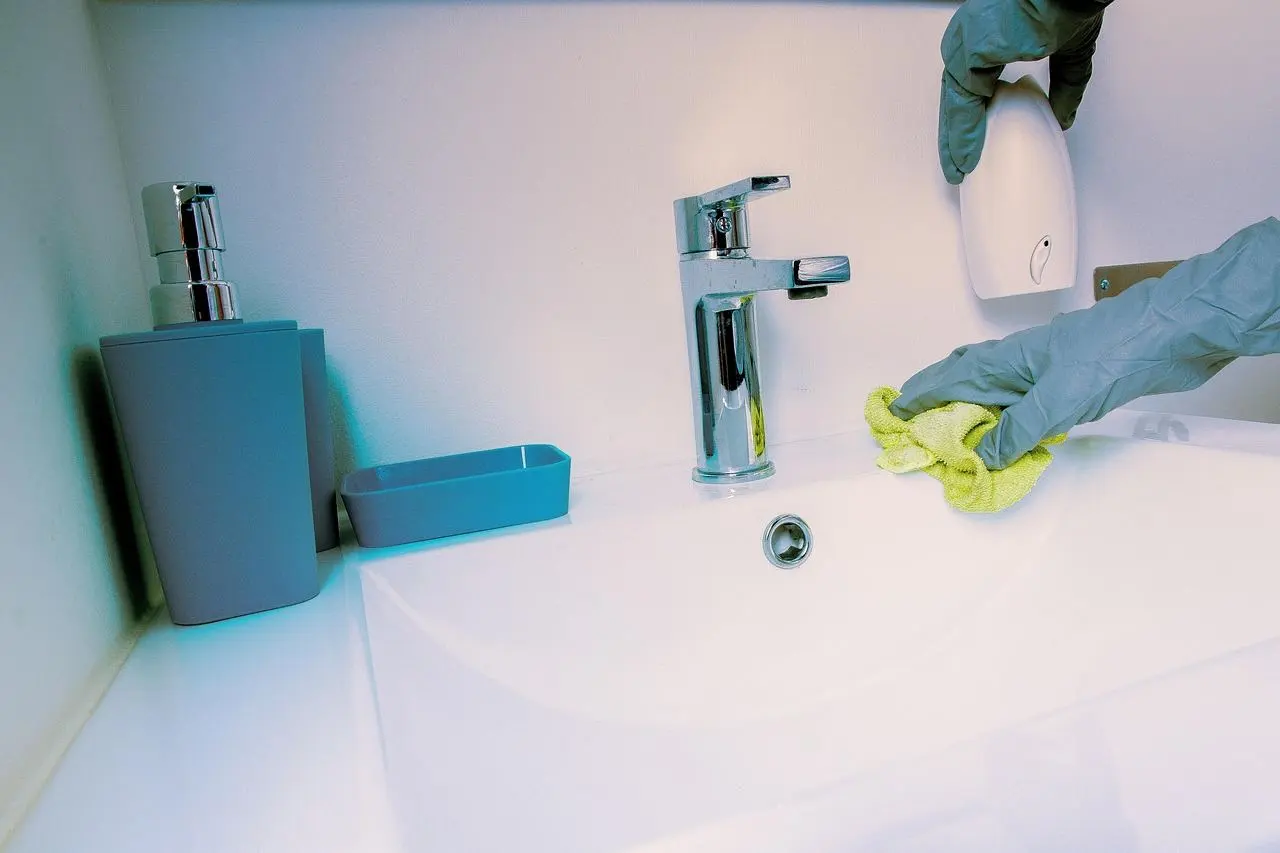
Staring at a grimy tub and wondering how to clean a bathroom without wasting an afternoon? Work from top to bottom, use one cleaner at a time, and let it sit before you scrub. Never mix bleach with other cleaners.
This guide belongs to the cleaning tips section.
| Item | Value |
|---|---|
| Bleach dilution (one brand’s disinfecting bleach) | ⅓ cup of bleach per 1 gallon of cool water |
| Time to keep the surface wet | 6 minutes to disinfect |
| Never mix bleach with | Ammonia or vinegar (toxic fumes) |
| Mold area that calls for a professional | More than 10 square feet of surface area |
| Protective gear for mold cleaning | Gloves, goggles, N95 respirator mask, long sleeves |
These figures come from Clorox’s bleach safety page and Bob Vila’s black mold guide. Figures can change, so check the source and your product label before you rely on them.
What you need before you start
Set out everything before you wet a surface, so you never leave a cleaner sitting while you hunt for a cloth. Plan on one product per surface and read its label first.
- Rubber gloves, especially for a long session
- A scrub brush and a sponge
- Separate cloths for the toilet and for the rest of the room
- A bucket for rinse water
- A window you can open or a fan you can switch on
Good ventilation matters because Clorox’s guidance says to use bleach on its own and in a well-ventilated space. The same page says not to use bleach on surfaces that are not bleach-safe, so check labels first.
Label-first habits carry over to the rest of the home, as covered in how to clean a kitchen.
Work from top to bottom
Dust and drips fall, so start high and finish on the floor. That order means you never re-clean something you already finished.
- Clear the room: take out towels, rugs, bath mats and anything standing on the counter or tub edge.
- Treat the tub or shower first: apply your cleaner to the walls and tub, then leave it for the time the label gives while you work elsewhere.
- Wipe high and dry areas: shelves, towel rails and the mirror.
- Clean the sink and counter: include the taps and the area around the drain.
- Scrub and rinse the tub or shower: work from the top of the walls down to the tub floor.
- Do the toilet last: use its own cloth and keep that cloth away from every other surface.
- Finish with the floor: work from the far corner toward the door so you never walk on wet ground.
Let the floor dry before you put clean towels and mats back. Wash the cloths you used on the toilet separately from the rest.
Using bleach safely in a bathroom
Clorox’s page lists toilet bowls, tubs, tile and grout among the bathroom places where bleach can tackle dirt, mold and mildew. For that company’s own disinfecting bleach, it gives a mix of ⅓ cup of bleach with 1 gallon of cool water.
The same page says to keep the surface wet for 6 minutes to disinfect. After disinfecting, it says to rinse surfaces with clean water and direct runoff away from gardens or wildlife.
The page also sets out a short list of things to avoid:
- Do not use undiluted bleach for cleaning.
- Do not mix bleach with other cleaners, especially ammonia or vinegar, because this can create toxic fumes.
- Do not use bleach on surfaces or fabrics that are not bleach-safe.
Your own bottle may differ from the example above, so the label directions on your product always win.
Spotting and handling bathroom mold
According to Bob Vila’s guide, mold needs three things to thrive: mold spores, a porous surface to latch onto, and high humidity or moisture. A damp bathroom can supply all three.
The same guide says the only sure way to identify black mold is to take a sample and test it. It adds that you should wear gloves, goggles, an N95 respirator mask and long sleeves if you clean mold yourself.
It also advises handing the job to a professional remediator if you are unsure of the mold type, see significant water damage, or find mold covering more than 10 square feet of surface area. If you notice health effects while working near mold, the guide says to stop and have a professional take over.
Keeping the bathroom clean between deep cleans
Since mold needs moisture, drying wet surfaces removes one of the things it relies on. Open a window or run the fan after showers, and hang towels so they dry fully.
A quick wipe of the sink and mirror each week makes the deep clean shorter. Slot both jobs into your house cleaning schedule so they become routine rather than a rescue.
Frequently asked questions
Can I mix bleach and vinegar for a stronger cleaner?
Show answer
No. Clorox warns that bleach combined with other household cleaners, particularly those containing ammonia or acids, can produce dangerous fumes. Use bleach by itself.
How long should disinfectant stay on a bathroom surface?
Show answer
For the Clorox product described on its guidance page, the surface should stay wet for 6 minutes. Other products set their own contact times, so read your label.
When should I call a professional about mold?
Show answer
Bob Vila’s mold guide, at this page, points to a professional when the type or extent is unclear, there is significant water damage, or the patch is larger than 10 square feet.
Which part of the bathroom do I clean first?
Show answer
Begin with the highest surfaces and the tub or shower, since cleaner needs time to sit. Leave the toilet and floor until the end so dirt does not get carried back onto finished areas.