
Buying your first home and wondering what to stock? The basic tools every homeowner needs are a tape measure, screwdrivers, a hammer, a level, pliers, a utility knife, an adjustable wrench and a cordless drill. Start there and add as projects demand.
This guide sits inside the wider topic of diy home repairs, which covers simple fixes around the house.
| Item | Value |
|---|---|
| Tape measure size suggested as an all-around choice | 25-foot tape measure |
| Adjustable wrench size suggested | Standard eight-inch wrench |
| Screwdriver types needed | Slotted and Phillips, at least a couple sizes of each |
| Size of ready-made beginner kit sets | Between a dozen and two hundred items |
| Plug on an outlet tester | 3-prong power plug with indicator lights |
| Most common power tool for homeowners | Cordless drill |
These figures come from Frontdoor’s September 22, 2023 post and Shellpoint’s December 5, 2023 guide. Recommendations can change, so check the sources before you rely on them.
Which basic tools belong in a starter kit?
Frontdoor’s post notes that a ready-made beginner set can hold somewhere between a dozen and two hundred items, many of which you may never use. It argues for a slower route: gather tools that match real tasks, because tools bought for today’s job make tomorrow’s cheaper.
Shellpoint’s guide makes a similar point, saying the right tools depend on the projects you are most likely to tackle, as set out in its December 5, 2023 beginner’s guide. In practice, that means starting with the jobs you will meet in the first year.
A practical starter list drawn from both guides:
- Measuring and marking: tape measure, level and stud finder.
- Fastening and gripping: screwdrivers, hammer and nails, an adjustable wrench, pliers and a cordless drill.
- Cutting and patching: utility knife and putty knife.
- Seeing and checking: a flashlight and simple testers.
Measuring and marking tools
Shellpoint calls a tape measure one of the most essential tools in a kit, handy when you replace an appliance, hang curtains, buy furniture or price new flooring. It suggests a 25-foot tape measure as a good all-around choice.
A level shows whether a surface is horizontal (level) or vertical (plumb), which matters when you hang pictures or fit shelving. Frontdoor points to bubble levels as a common type that suits home use, and Shellpoint adds that models with a floating bubble are accurate and budget-friendly.
A stud finder locates the wood supports inside your walls, so screws and nails go into something solid. Knowing where the studs sit also tells you where not to drill.
Fastening and gripping tools
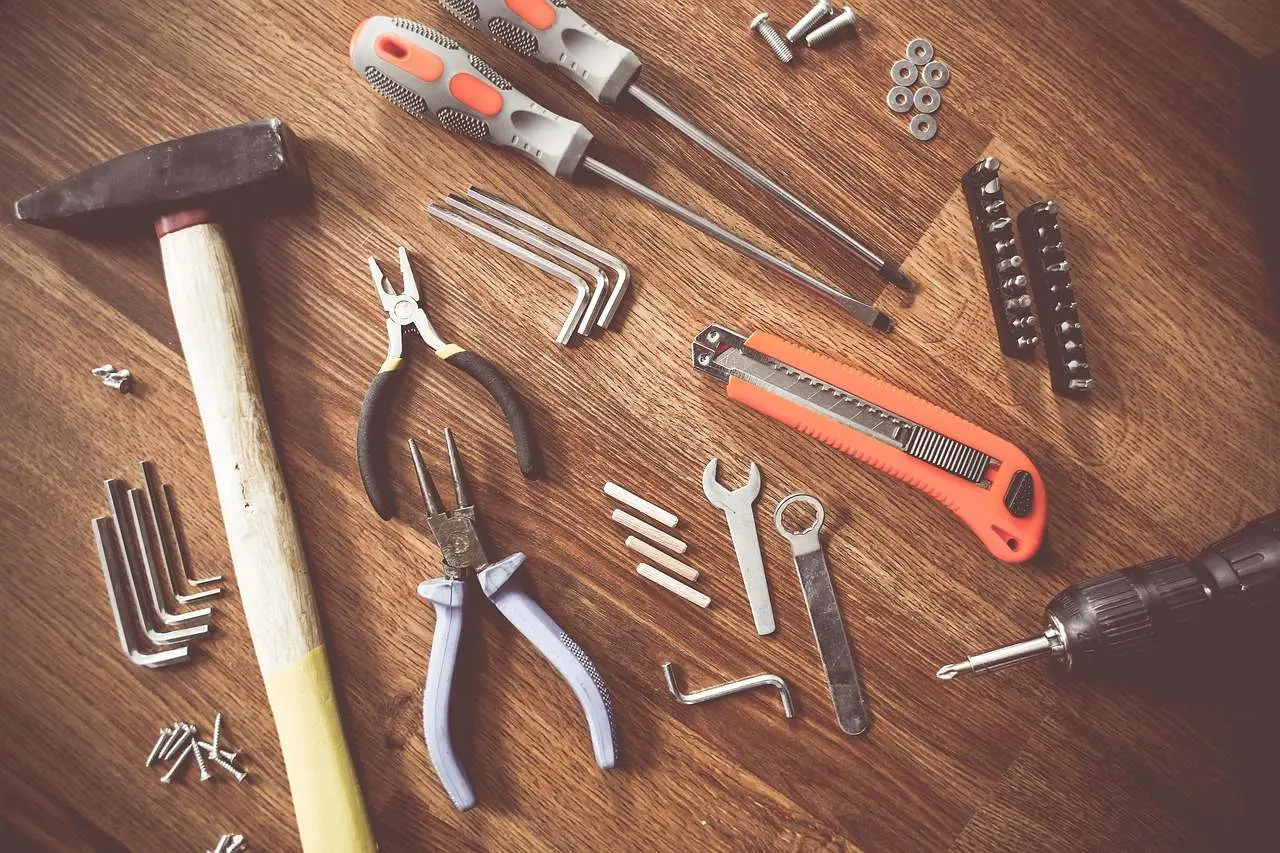
Most small repairs come down to turning, tapping or gripping something. These are the tools the two guides name for that work:
- Screwdrivers: you need both slotted (flat head) and Phillips (x-shaped) types, with at least a couple sizes of each.
- Hammer: start with a basic clawed hammer and some nails, says Shellpoint.
- Pliers: keep both regular and needle-nose pliers on hand for gripping, cutting wire and tightening nuts and bolts.
- Channel locks: angled pliers, also called tongue-and-groove or water pump pliers, built for a strong grip.
- Allen wrenches: small L-shaped hex keys commonly used for furniture assembly and bike repair.
- Cordless drill: described as the most common power tool a homeowner should own, and useful for mixing paint as well as drilling.
The adjustable wrench deserves a note on quality. Frontdoor says a standard eight-inch wrench should do, as long as the jaws do not wiggle when you shake it.
Cutting, scraping and patching tools
A utility knife does more than open boxes. Shellpoint says it can scrape paint from windows that are painted shut and cut carpet and drywall, as noted in its beginner’s guide.
A putty knife comes in several widths. Frontdoor suggests a narrow blade for filling small nail holes in walls or wood and a wide blade for larger surfaces and drywall work, according to its tool list.
For bigger cuts, a simple hand saw covers indoor and outdoor projects. Shellpoint calls a powered miter saw one of the more expensive tools on its list, so it is an add-on rather than a starter buy.
Sealing is another common patching job. State Farm’s maintenance pages list sealing air leaks with caulk or weather stripping as a simple DIY update, and for a worked example you can read how to caulk a bathtub in how to caulk a bathtub.
Testing tools and knowing your limits
Frontdoor describes a digital multimeter as a tool for measuring electrical properties such as voltage, current and resistance. It also describes a plug tester as a device that plugs into a wall outlet to show how the outlet is wired, using a 3-prong power plug with indicator lights.
These tools help you spot a problem, not fix one. Electrical, gas and structural work beyond simple homeowner tasks belongs with a licensed professional, so treat a tester reading that looks wrong as a reason to call one.
How to build your kit over time
Frontdoor says that as you take on more DIY projects, you will want to consider adding to the kit. Its list of next buys includes clamps, wire cutters, a handsaw, a chisel set and a socket set.
Shellpoint also reminds readers to get a toolbox so everything stays together, per its guide. A toolbox makes it easier to see what you already own before buying a duplicate.
A seasonal routine shows which tools you actually reach for. Pairing the kit with a home maintenance checklist is one way to match purchases to real jobs.
Frequently asked questions
Is a premade tool kit worth buying?
Show answer
It can be. Shellpoint says premade kits bundle several items for a lower price than buying each one alone, as written in its beginner’s guide. Check that the set contains tools you will actually use.
Do I need a flashlight if my phone has one?
Show answer
Shellpoint advises keeping a dedicated flashlight for emergencies, even though phone lights are convenient. It also helps in dark spots such as under sinks or in basements, per the same guide.
Why bother with a stud finder?
Show answer
Walls can hide a water line, a gas pipe or wiring. Shellpoint warns that piercing one could lead to problems as serious as a fire or explosion, according to its guide.
Which tools should I add after the basics?
Show answer
Frontdoor’s follow-up list names clamps, wire cutters, a handsaw, a chisel set and a socket set. Pick whichever one your next project calls for.