
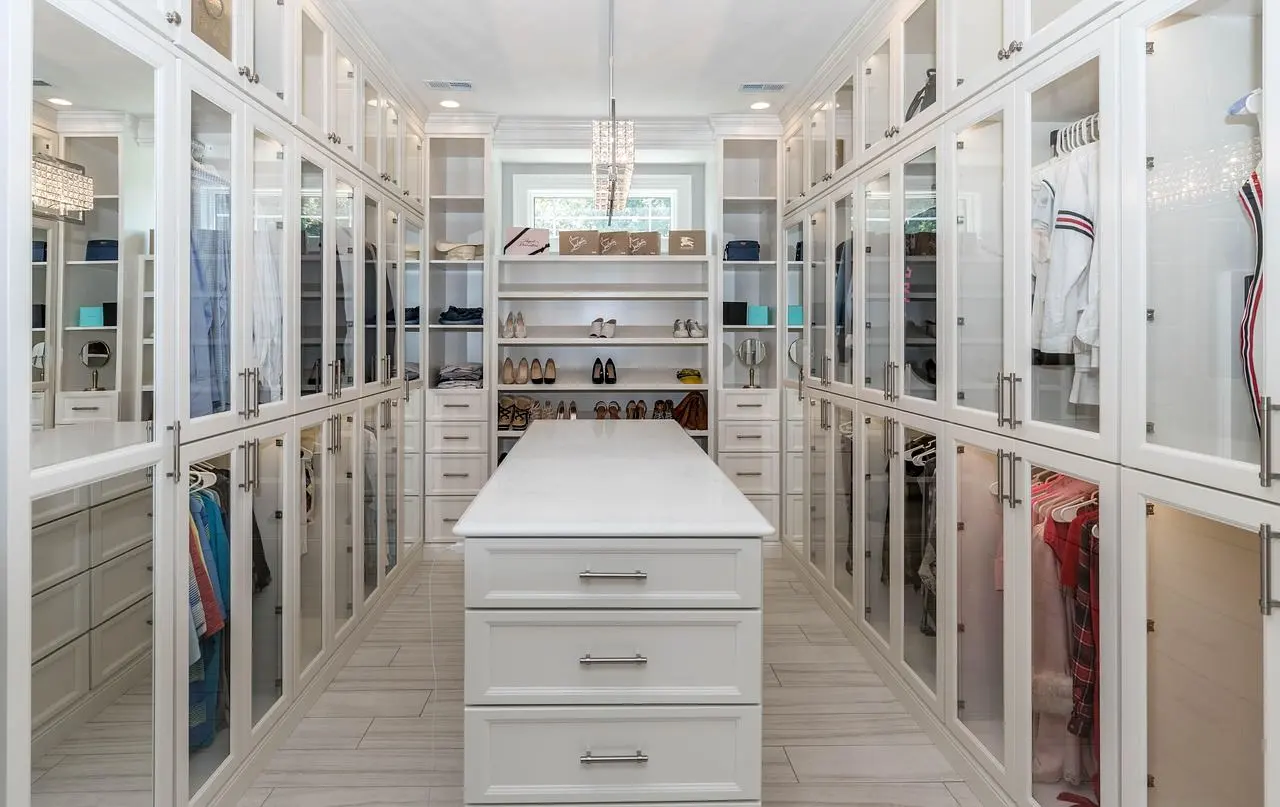
Is your closet bursting at the seams? These closet organization ideas from professional organizers start with decluttering, then hang only what creases and reuse what you already own.
This guide is one part of the wider topic of home organization.
| Item | Value |
|---|---|
| Crush test for deciding what to hang | three seconds |
| Tips in the Homes & Gardens guide to organizing without buying anything | six tips |
| Tips in the Woman & Home guide to small closets | 14 expert tips |
| Hangers needed for a blouse-and-cardigan sweater set | one hanger |
| Experience of the professional organizer quoted on decluttering first | over 15 years |
These figures come from Homes & Gardens and Woman & Home. Pages get updated, so check the source before you rely on them.
Start by sorting, before you buy anything
Both guides put sorting ahead of storing. The Woman & Home guide says that when you organise a small space, decluttering is always the first step, so that everything left is worthy of the space.
Professional organizer Michelle Garb, described as having over 15 years of experience, says your first step is to go through the closet and work out what no longer fits you or looks good on you. Homes & Gardens quotes her in a piece about organizing without buying anything.
Keep a pile of freed-up hangers and organizers to one side as you go. When you add things back, group them into categories so you can see what is possible and where you may need to compromise, as the same guide advises.
The case for reusing what you own is practical. The guide says it is relatively simple to keep clothes organized with what you already have at home. It adds that doing so can be a little more sustainable and avoids bringing more plastic containers into your space.
Which clothes should hang and which should fold?
Once the closet is decluttered, the Homes & Gardens guide suggests starting with the hanging space and working out what absolutely needs to hang. Professional home organizer Darla DeMorrow says that includes thick trousers such as jeans, which are bulky when folded, and anything that creases easily.
To check how easily a fabric creases, she describes a simple crush test:
- Ball the fabric up in your fist.
- Crush it in your palm for three seconds.
- Let go and look at the fabric.
- If it holds onto deep creases, the garment is best hung.
The same guide lists folding technique as its own step, with the aim of keeping stacks of clothes uniform. In other words, hanging space goes to the bulky and crease-prone items, and the rest is a matter of neat, even stacks.
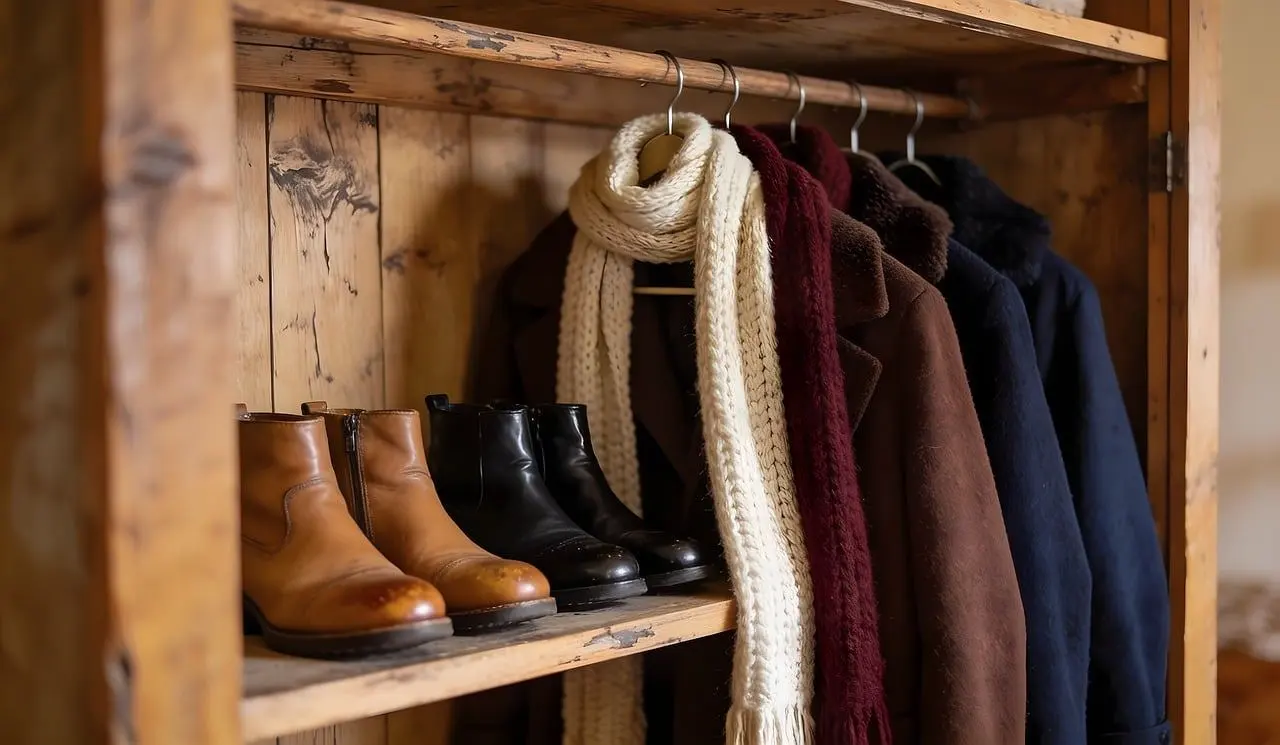
Stretch the hangers, shelves and storage you already have
Hangers are often the first thing to run short. DeMorrow suggests layering several garments on one hanger: a sweater set can pair a blouse and a cardigan, and several camis can loop over the hook of a single hanger.
She admits this is not ideal for seeing what you own at a glance. The trade-off, she says in the Homes & Gardens piece, is less reliance on hangers and less need to buy more.
The same guide’s other tips are about reusing storage rather than purchasing it:
- Rearrange existing shelves to add or remove height for storage.
- Repurpose existing storage units from around the home.
- Shop your home for existing bins or boxes to double shelf space.
Each idea starts with looking at what is already in the house, which is why decluttering comes first: it frees up the very items you may want to reuse.
Free up room by moving things out of the closet
Sometimes the closet is not the only place to look. Professional organiser Vicky Silverthorn tells Woman & Home to think about the rest of your bedroom storage first, because out-of-season clothes can leave the wardrobe altogether and free up valuable space.
She raises three questions worth asking about the room:
- Do you need a bed with built-in storage?
- Could a chest of drawers beside the bed replace bedside tables?
- Is there space for an ottoman?
After that, the guide turns to tips from APDO, the association of professional declutterers and organisers, for making what remains work harder. Its full list runs to 14 expert tips, per the article title.
If your closet sits in a bedroom, the wider ideas in bedroom organization pair naturally with these steps. The same sort-first approach also carries over to bathroom organization.
A sensible order of work
The two guides do not give a single fixed routine, but their advice falls into a clear sequence you can follow in an afternoon-sized chunk at a time.
- Pull out what no longer fits or suits you.
- Set aside the spare hangers and organizers that frees up.
- Sort the rest into categories.
- Decide what hangs and what folds, using the crush test for doubtful fabrics.
- Double up hangers where it makes sense.
- Look around the home for bins, boxes and shelving to reuse.
Frequently asked questions
Do I have to buy organizers to get started?
Show answer
Not necessarily. The organizers quoted by Homes & Gardens treat spare hangers, shelving, bins and boxes from around the house as the starting kit, and clearing out unwanted clothes releases even more of them.
How can I tell if a garment needs a hanger?
Show answer
Squeeze it briefly in your hand. If deep creases stay when you open your fist, DeMorrow’s advice in the Homes & Gardens guide is to hang it, and bulky items such as jeans also belong on hangers.
Is there a way to get more from each hanger?
Show answer
Yes. Pairing pieces, such as a blouse with a cardigan, saves hangers according to the same organizer, though you will see your clothes less clearly.
What if my closet is simply too small?
Show answer
Look beyond it. Silverthorn’s suggestions in Woman & Home include a storage bed, drawers in place of bedside tables or an ottoman, so seasonal clothes have somewhere else to live.