
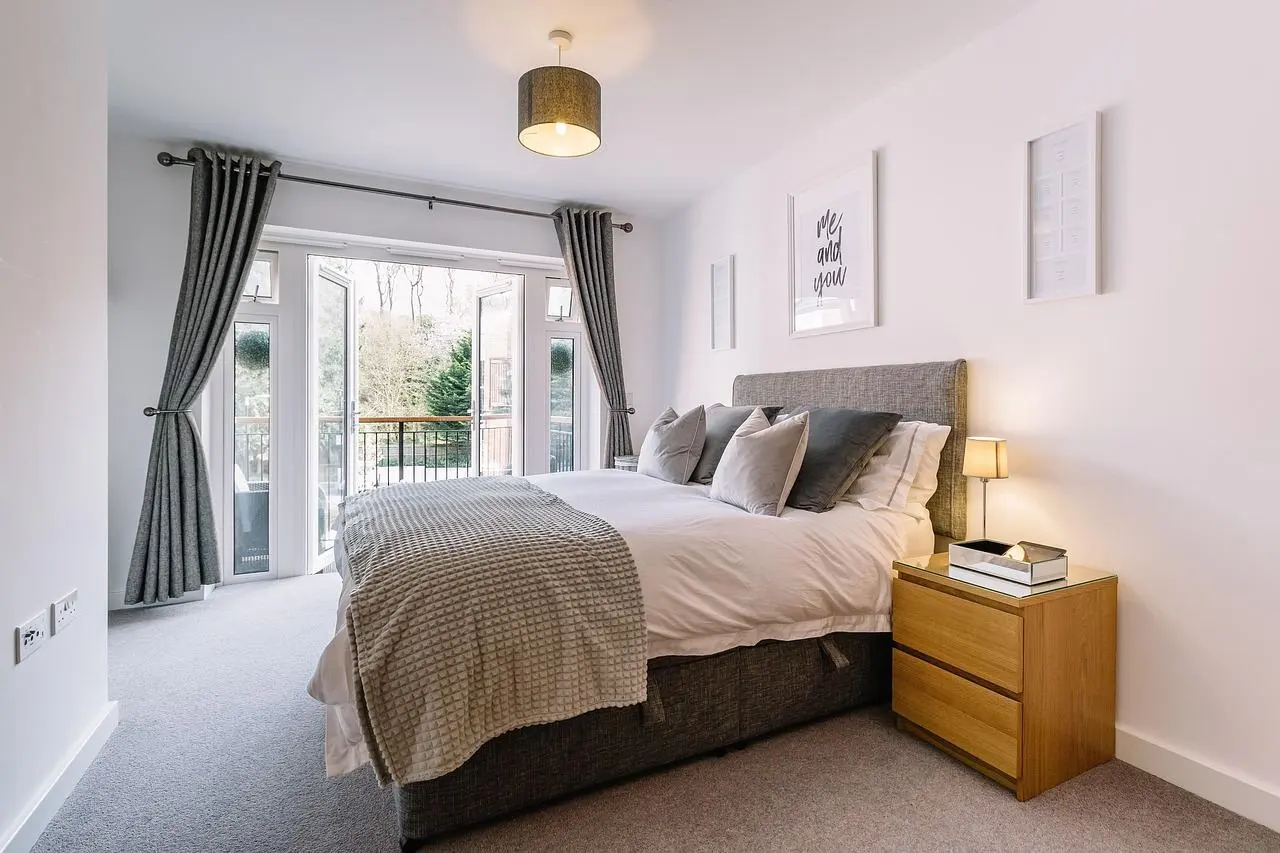
If your bedroom feels more like a storage room than a retreat, you’re not alone. Good bedroom organization comes down to one idea: keep only sleep and dressing items, then give everything else a clear, closed home.
This guide sits within the wider topic of home organization, which covers every room of the house.
| Key fact | Figure |
|---|---|
| Share of clothing worn most of the time | 20% of clothing worn 80% of the time |
| Professional ways to organise a bedroom | 7 ways |
| Questions to ask before keeping an item | three questions |
| Area to tackle at a time | one area |
| Wardrobe groups for seasonal sorting | two groups: warm weather and cool weather |
These figures come from Livingetc’s bedroom guide and Homes & Gardens’ bedroom guide. They can change, so check the sources before you rely on them.
Keep only sleep and dressing items
The first rule of bedroom organization is deciding what the room is for. According to Homes & Gardens, experts suggest keeping only items related to sleep and getting dressed in the space, which can promote good sleep and improve relaxation.
Next, take out anything that does not belong. Homes & Gardens names dishes, old magazines and laundry as typical strays, so return each one to the room where it lives.
For everything that stays, ask three questions, a test set out by Homes & Gardens:
- Is it functional?
- Does it look good?
- Does it do what it needs to do?
A no to any of them means the item can go.
A step-by-step order for the clear-out
Emptying the whole room at once is a common trap. A decluttering expert quoted by Homes & Gardens warns that pulling everything out in one go takes far longer than you expect.
- Pick one area, such as the nightstand or a single drawer, then work on it and complete it before you stop, as Homes & Gardens advises.
- Sort what you own into five piles: keep, donate, toss, give away and sell, a method described by Real Homes.
- Carry anything that belongs in another room back to where it lives.
- Put the keepers back in a spot with a clear job, within easy reach.
- Move on to the next area only when the first is finished.
Use the storage you already have
The space under the bed is the easiest place to start. Homes & Gardens calls it one of the best small bedroom storage locations, and a professional organizer there advises under-bed storage that is easy to push in and out so you keep using it.
That space suits out-of-season clothes, bed linen, blankets or a yoga mat, according to another Homes & Gardens writer.
Livingetc quotes a professional organizer who suggests looking for overlooked storage areas, such as under the bed, behind doors or storage nightstands. The same guide says an ottoman can hold everyday essentials. Other spots worth checking:
- The back of the bedroom door.
- A nightstand with a drawer or shelf.
- An ottoman, which can double as seating.
Matching storage looks calmer than a patchwork. A professional organizer in Homes & Gardens warns that mismatched, small pieces of shelving and drawers look visually distracting even when the system works. Inside dressers, Real Homes suggests drawer organizers to keep contents neat and ordered.
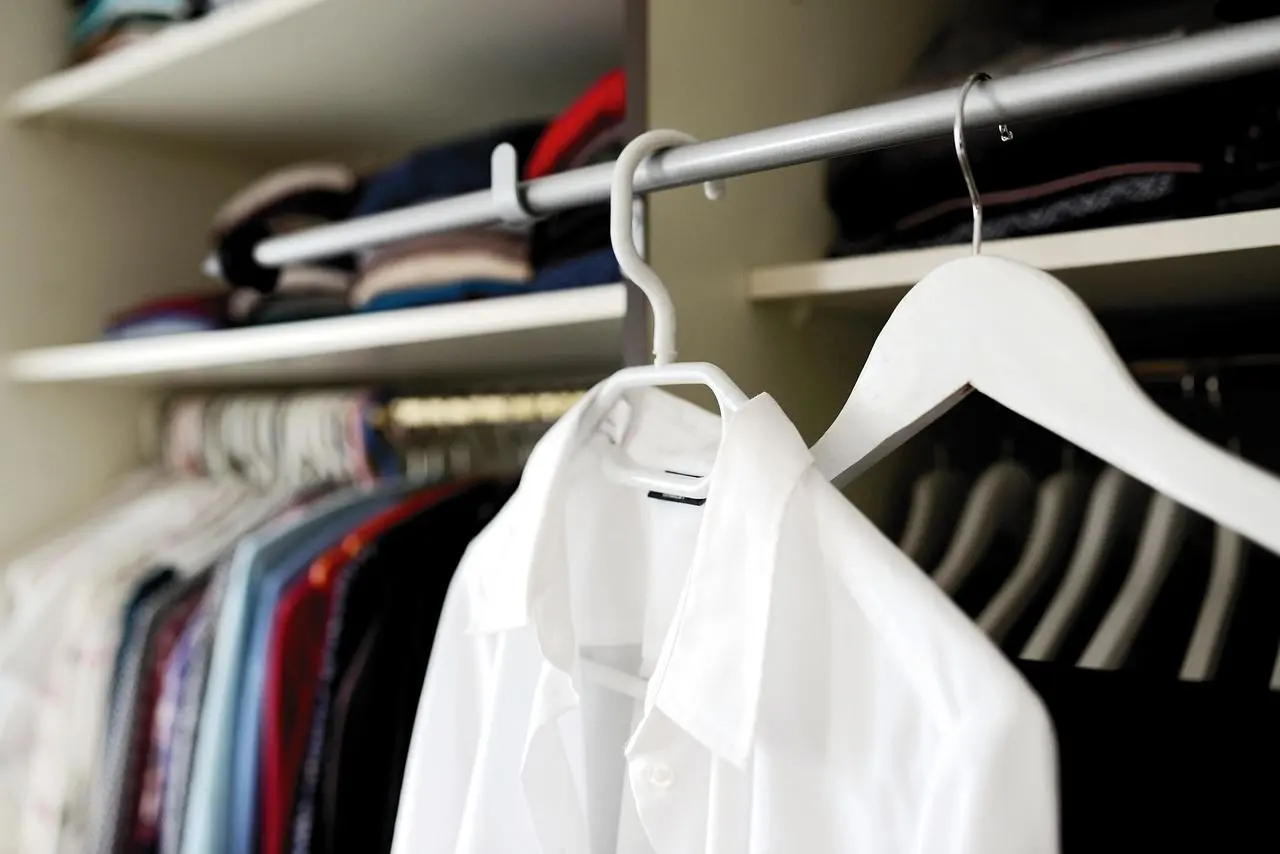
How should you sort clothes by season?
Seasonal sorting frees space faster than buying more storage. Livingetc quotes an organizer saying studies have shown we wear 20% of our clothing 80% of the time, which makes a case for keeping what you actually reach for.
Divide the wardrobe into two groups, warm weather and cool weather, as Livingetc recommends. Keep the clothes you are wearing closest to the front or centre, and use higher shelves for the opposite season.
Add a one-in, one-out rule, too. Before something new comes in, Livingetc says to take out a similar item you no longer reach for.
For the wardrobe itself, the closet organization ideas guide covers hanging and shelf space in more depth.
Calm surfaces, walls and the bed
Visual clutter matters as much as the physical kind. Homes & Gardens says clutter takes mental energy, creates stress and makes it harder to relax, so clear visible surfaces first.
The bed can be part of the problem. The same source notes that too many blankets, pillows and throws can overwhelm it and make it look overly busy. If you have no linen closet, a professional organizer there suggests a storage bench at the end of the bed, which also provides extra seating.
Walls follow the same logic. Homes & Gardens advises choosing a few favourite pieces for a single wall and keeping the others clean for a balanced, airy look.
Finally, give the room zones. An organizer quoted by Homes & Gardens says designating areas for sleeping, dressing and putting makeup on gives structure and a clear idea of what goes where.
If kitchen items keep drifting upstairs, the kitchen organization ideas guide can help you give them a proper home downstairs.
Small bedroom adjustments
In a small room, think about display as well as storage. A Homes & Gardens writer recommends you stop thinking about how to store and start thinking about how to display, for example by showing off books or plants you love.
Accessibility counts too. The same writer finds closed storage essential for larger items, but not ideal for the small things you need to grab when running out the door, so keep daily items within easy reach.
Frequently asked questions
What should you avoid storing under the bed?
Show answer
There is no strict rule, but one Homes & Gardens writer avoids suitcases and workout gear there. Their reasoning is that items linked to trips and exercise feel too exciting for a space meant for winding down. Spare bedding and off-season clothing suit it better.
Where can off-season clothes go if the wardrobe is full?
Show answer
Livingetc suggests an alternate location, such as a basement or garage, with the clothes kept in air-tight bins. Real Homes adds that vacuum pack bags are an easy way to save space.
Should a desk or work gear stay in the bedroom?
Show answer
Homes & Gardens says devices, desks and work-related items can create an association of alertness instead of relaxation. If there is truly nowhere else for them, closed storage can at least keep them out of sight.
Why does a small bedroom get cluttered so quickly?
Show answer
Furniture is often the cause. Real Homes notes that a smaller bedroom filled with too many pieces of furniture is naturally going to feel cluttered, so make sure what you own suits the size of the space.