
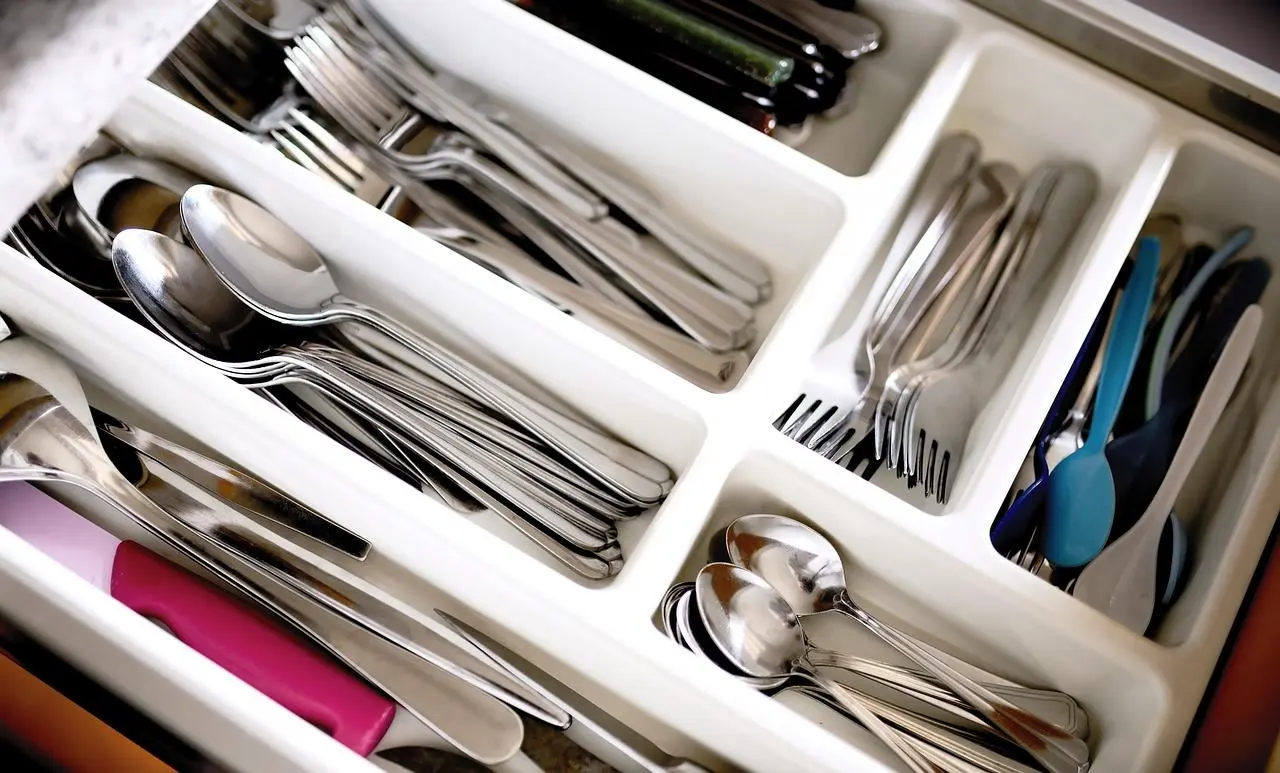
Cluttered counters and crowded drawers slow you down. The best kitchen organization ideas start with grouping items by where you use them, in zones, then clearing out duplicates and expired items.
This guide sits within the wider topic of home organization, which covers the other rooms too.
| Item | Value |
|---|---|
| Mothers in the kitchen study | 20 moms |
| Length of each interview | 45 minutes |
| Barriers to an organized kitchen that they cited | 3 barriers |
| Kitchen centers described in textbooks | 3 centers |
| Paper trays suggested for the household | one tray per family member |
These figures come from an NDSU Extension column that reports on one small study. Sources can be updated, so check the original before you rely on the numbers.
Start with an inventory of what you already own
Before you buy a single container, take stock of what is in the room. K-State Research and Extension food scientist Karen Blakeslee shares tips for organizing, and sometimes totally reorganizing, a kitchen in a Sound Living episode dated January 22, 2019.
The episode suggests going through your kitchen for three kinds of items:
- things that are creating clutter
- things that are no longer being used
- things that are now well beyond their expiration date
Anything that falls into those groups can leave before you decide where the rest belongs. For a method that covers every room, see the guide on how to declutter your home.
Build kitchen zones around how you cook
NDSU Extension food and nutrition specialist Julie Garden-Robinson advises placing things within easy reach of where they will be used, rather than storing them wherever they happen to fit. Her column lists three “centers” commonly described in textbooks about kitchen organization.
- Food storage and preparation: around the refrigerator-freezer, with cabinets nearby.
- Cooking and serving: the area for the things you cook and serve with.
- Cleanup: by the sink and dishwasher, if you have one.
Watch which items you reach for together while you cook a few ordinary meals. Those pairs show you where each zone should sit in your own layout.
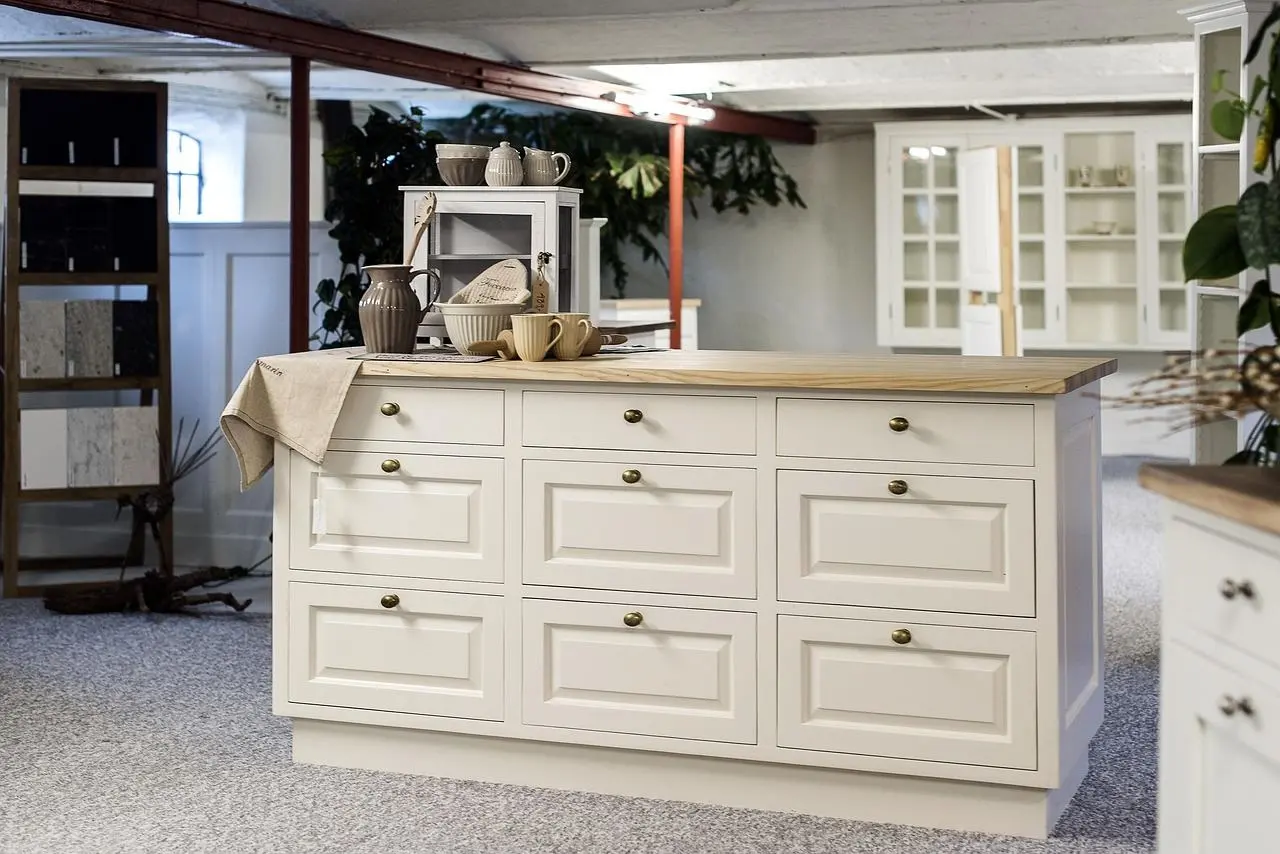
Cupboards and drawers: what lives where
Once the zones are mapped, stock each one with the items that belong to that job. The same column gives examples for every center:
- Near the refrigerator-freezer, keep accessories such as foil, plastic wrap and storage containers alongside the food.
- In the cooking and serving center, keep pots, pans and cooking utensils such as spatulas, serving bowls and potholders.
- At the cleanup area, keep dishtowels, cloths and detergents, and perhaps a colander and vegetable peeler within reach.
The column also asks you to test the setup with a real task: can you easily reach everything you need when making cookies? It also asks whether you could streamline your drawers to get rid of duplicates, which leaves room for what you really use.
Worktops: giving paper and “stuff” a home
The columnist describes clearing a stack of mail and newspapers from a countertop and another stack from a table. Counters collect paper fastest when nothing else has a designated place, so give every pile somewhere to go. Her suggestions work as a short routine:
- Set aside a regular time to sort through accumulating papers.
- Put a rolling file cabinet or plastic tub in a designated spot, and use it instead of dropping items on the counter.
- Use a set of stacking trays for papers, with one tray for each family member.
- Give the paper in each tray an expiration date, or the trays can turn into out-of-control stacks.
Why does kitchen clutter keep coming back?
The NDSU column draws on a study reported in The Forum for Family and Consumer Issues. Twenty moms of young children took part in 45-minute telephone interviews, and they cited three barriers to keeping their kitchens organized:
- limited or poorly used storage space
- lack of time
- “family members who mess it up”
In another phase, the moms tried educational packets that helped them analyze the zones in their kitchens and prioritize changes. Overall, they gave high ratings to the researchers’ advice.
Zone thinking is not limited to the kitchen. The same habit of storing things where you use them carries over to bedroom organization.
Frequently asked questions
When is the best time to clear out cupboards and drawers?
Show answer
Cleaning the refrigerator, oven, freezer, cabinets and drawers is typically treated as a spring project. The K-State episode of January 22, 2019 argued that midwinter is also a good moment, so you do not have to wait for the season. Read the episode notes for the wording.
Do I need to buy organisers first?
Show answer
The two sources used here start somewhere else: with an inventory of what you own and with placing items near where they are used. Neither makes buying products the first step, so sort and group before you spend anything.
Does the whole household need to take part?
Show answer
Yes, as far as the NDSU column goes. It says controlling kitchen clutter takes some personal discipline and help from others in your household, which is why it suggests a separate paper tray for each person. Agreeing on where things go makes that help easier to give.
Will a layout that works now stay right?
Show answer
Not necessarily. Your needs change through time as children grow up or your living situation changes, according to the NDSU column. A simple rearrangement is often enough to keep everything you need at hand.