
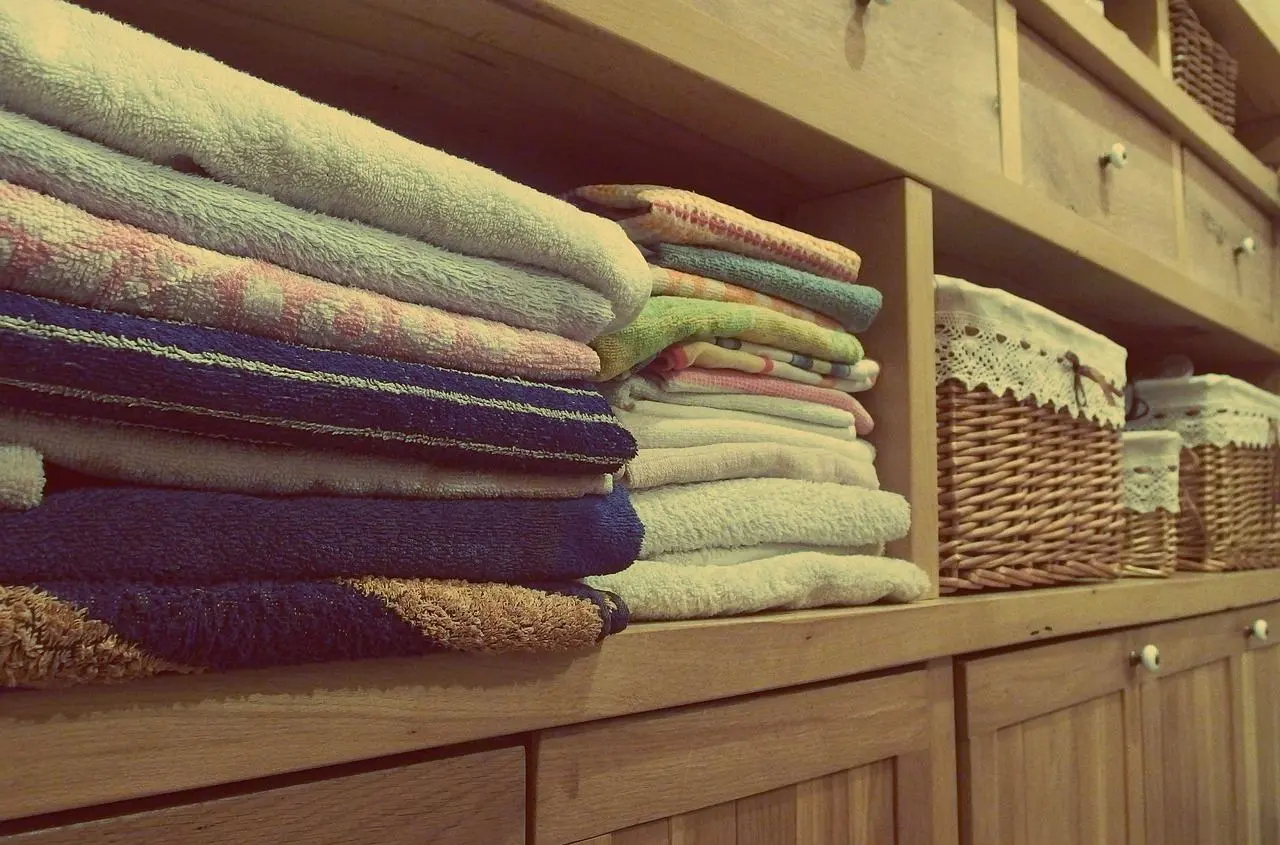
If you share a small bathroom, clutter builds fast. Good bathroom organization gives every item a fixed home, with cleaners kept in original containers and bleach stored apart from ammonia products.
This guide sits within the wider topic of home organization, room by room.
| Item | Value |
|---|---|
| Bleach with ammonia | Never mix: toxic gas that could be fatal |
| Bleach with other cleaners | Do not mix with toilet bowl cleaners, rust removers, vinegar or other acids |
| Bleach and ammonia storage | Keep stored apart |
| Cleaning product containers | Store in their original containers |
| US poison control line | 800-222-1222 |
These figures and rules come from Clorox and Healthline. Guidance can change, so check the sources and your product labels before you rely on them.
Start with who uses the room and what they need
Before you buy a single bin, list what each person actually keeps in the bathroom. In a shared bathroom the real problem is usually overlap: duplicate bottles of the same product, or towels that never dry because the hooks are crowded.
Sort everything you own in the room into groups:
- Daily items each person reaches for, such as toothbrushes, razors and face wash
- Occasional items, such as spare toiletries or a basic first-aid kit
- Cleaning products, which need their own storage rules (covered below)
- Things that do not belong in the room at all, like old magazines or empty bottles
Toss empties and duplicates first. You will often find that the space you thought you lacked was simply taken up by items nobody uses.
Zones that work in small and shared bathrooms
A zone is a defined spot for one kind of item or one person’s things. Zones stop a small bathroom from turning into a single shared pile, and they make it obvious when something has been left out.
- Clear one surface at a time, such as the sink edge, then the shelf, then the cabinet.
- Give each person a labelled basket, caddy or drawer for personal items.
- Store shared items, like spare toilet paper and hand soap, where they are used.
- Move rarely used items to the highest or deepest spot, and daily items to eye level.
- Add vertical space with over-door hooks, a wall shelf or a slim rolling cart.
Fitting a light shelf is a simple homeowner task. If a wall may hide pipes or wiring, or the job involves electrical or structural work, use a licensed professional instead.
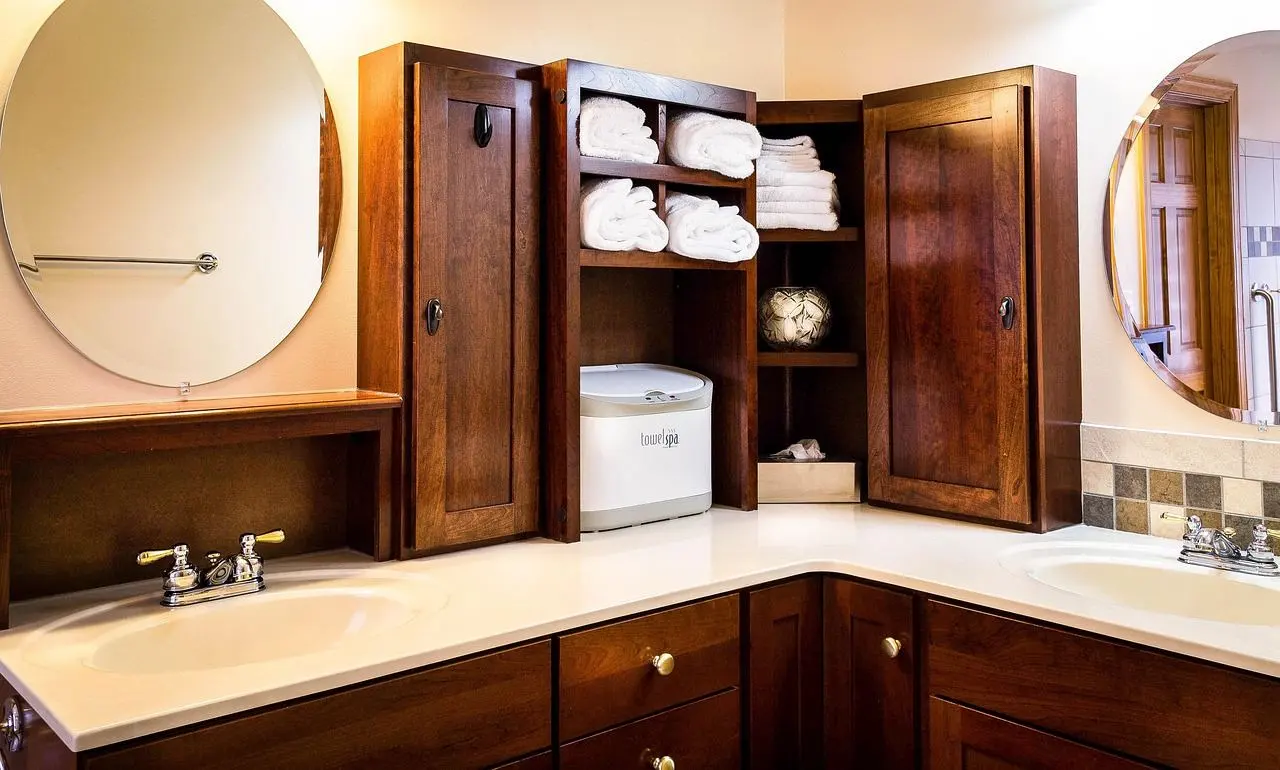
Where should cleaning products live?
Cleaning products deserve a rule set of their own, because a tidy shelf can still be an unsafe one. Healthline advises that you always store cleaning products in their original containers, and that bleach and ammonia be kept out of reach of children.
Keeping the original bottle means the label, directions and warnings stay with the product. A Healthier Michigan article on cleaning products not to mix adds that you should always use cleaning products according to the manufacturer’s directions.
A practical setup for a small bathroom:
- One closed bin or high cabinet shelf reserved for cleaners only
- Bottles kept upright, with labels facing out
- No unlabelled spray bottles or refilled containers
- A separate bin for brushes, gloves and cloths used with cleaners
The UK supplier chemicals.co.uk suggests that if you need both bleach and ammonia, you label each product and affix a large warning to both containers. It also recommends storing the products separately and using each one only in a designated area.
Which cleaners should never share a shelf?
The biggest storage risk in a bathroom is chemical. Clorox states that bleach and ammonia should never be mixed, because toxic gas forms that could be fatal.
The warning is wider than ammonia alone. Clorox says as a general rule that bleach should not be mixed with other household cleaners such as toilet bowl cleaners, rust removers, vinegar and other acids.
A Healthier Michigan lists examples of acidic cleaners: drain cleaners, mold removers, tub and tile cleaners, decalcification cleaners and toilet bowl cleaners, according to its March 2023 article. Many of these live under a bathroom sink, so sort them with this in mind.
Clorox also recommends checking how you store ammonia and bleach, and keeping them apart so they cannot combine if one is knocked over, for instance in an earthquake. In practice, that means separate bins, and ideally separate shelves.
If you ever do mix products by accident, Healthline says to get to a well-ventilated area and call your local poison control center on 800-222-1222 if you can breathe but were exposed to fumes. This is general agency-style guidance, not medical advice, so follow your product label and local emergency services.
Habits that keep a shared bathroom tidy
Systems fail when they take too much effort, so keep the routine short. A quick reset at the end of the day usually beats an occasional big clear-out.
- Return items to their zone after use, and ask everyone in the household to do the same.
- Review each person’s basket on a regular schedule and remove empties.
- Buy refills only once the old bottle is finished.
- Keep cleaning products out of the way of daily-use items.
When towels and spare linens outgrow the room, the storage ideas in closet organization ideas can help you move the overflow elsewhere. Bulk supplies that never fit in a bathroom may suit the layouts described in garage organization ideas, as long as chemicals stay labelled and away from children.
Pet owners should note one more detail: Healthline says not to clean litter boxes, diaper pails or pet urine stains with bleach, because urine contains small amounts of ammonia.
Frequently asked questions
How do I start organising a tiny shared bathroom?
Show answer
Begin by emptying one surface and sorting what is on it into daily, occasional and cleaning items. Then give each person a basket or drawer, and put shared items where they get used.
Can bleach and ammonia cleaners sit on the same shelf?
Show answer
It is safer to give them separate spots. Clorox advises storing them so they cannot combine, and chemicals.co.uk suggests labelling both products clearly.
Should I decant cleaners into nicer bottles?
Show answer
Healthline recommends against it and says to keep products in the containers they came in. Decanting removes the label and its warnings, which matter most in a shared home.
What should I do if I smell fumes after mixing cleaners?
Show answer
Healthline says to leave for fresh air at once, and to call 911 or your local emergency services if breathing is hard. See Healthline’s guidance for the full steps.