

Wondering how to organize paperwork at home without keeping everything forever? Sort it into act, keep and shred piles, then file the keepers by category, and hold tax records until the audit window closes.
This guide is part of our home organization coverage.
| Record or rule | Retention period |
|---|---|
| Income tax returns and supporting documents | At least three years |
| Typical IRS audit window | Generally three years after the due date or the filing date, if later |
| Employment tax records | Four years |
| Unreported income above 25% of the gross income on a return | Six years |
| Claim for worthless securities or bad debt deduction | Seven years |
| Unfiled or fraudulent return | Indefinitely |
The figures come from Kiplinger’s page, last updated 15 March 2026, and TaxAudit’s April 2017 post. Tax rules and figures can change, so check the source before you rely on them.
Sort first: act, keep or shred
Gather every loose sheet from counters, bags and drawers into one place. Then give each paper one job: act on it, keep it, or shred it.
- Act: bills to pay, forms to sign, replies that are due.
- Keep: records you may need to prove something later, such as income or deductions.
- Shred: papers that have done their job and carry account numbers or personal details.
Do the “act” pile first and the same day, so it does not slide back into the clutter. Leave the “keep or shred?” questions for the next section, where the retention rules sit.
How long should you keep tax records?
Kiplinger notes that, as of its 15 March 2026 update, the tax agency generally has three years after the due date of your return (or the date you file it, if later) to initiate an audit. You can read the details on Kiplinger’s tax records page.
Its advice is to save documents that support the income, deductions and credits on your return for at least three years after the filing deadline. That generally covers:
- W-2 forms reporting income.
- 1099 forms showing income, capital gains, dividends and interest on investments.
- 1098 forms, if you claimed the mortgage interest deduction.
- Canceled checks and receipts for charitable contributions, if you itemize deductions.
Situations with longer limits
TaxAudit’s April 2017 post lists longer periods for particular cases, and says they start on the date the return is filed. See the TaxAudit post for the full wording.
- If you owed tax, keep the records for three years after you finish paying it.
- Employment tax records: four years.
- Unreported income of more than 25% of the gross income shown on the return: six years.
- A claim for a loss from worthless securities or a bad debt deduction: seven years.
- No return filed, or a fraudulent return: keep the records indefinitely.
Which papers can you shred sooner?
Not everything needs the full tax-record treatment. Kiplinger suggests holding pay stubs only until you have checked them against your W-2s, and shredding them if the totals match. Monthly brokerage statements get a similar approach: you can generally dispose of them once they agree with your year-end statements and 1099s.
Donation paperwork depends on how you file. If, like most people, you do not itemize deductions on Schedule A, you may not need to save as many documents, and that includes donation receipts kept only for tax purposes.
Some papers should stay put longer. Kiplinger says it may be wise to keep W-2 forms until you start receiving Social Security benefits, so you can verify your income if a problem comes up. It also says to keep Roth IRA contribution records for three years after the account is emptied.
Build a simple filing system
A system you will actually use beats an elaborate one. One box, drawer or accordion folder is enough for most households, with a label on each section.
- Create a small tray or folder for papers that need action, and empty it on a set day each week.
- Make a folder for the current tax year and drop in receipts and forms as they arrive.
- Add category folders for banking, insurance, medical, home and vehicles, plus one for identity documents.
- Label each folder in plain words, and put the retention end date on anything you are holding for a fixed period.
- Put the shred bag next to the box so expired papers leave the house quickly.
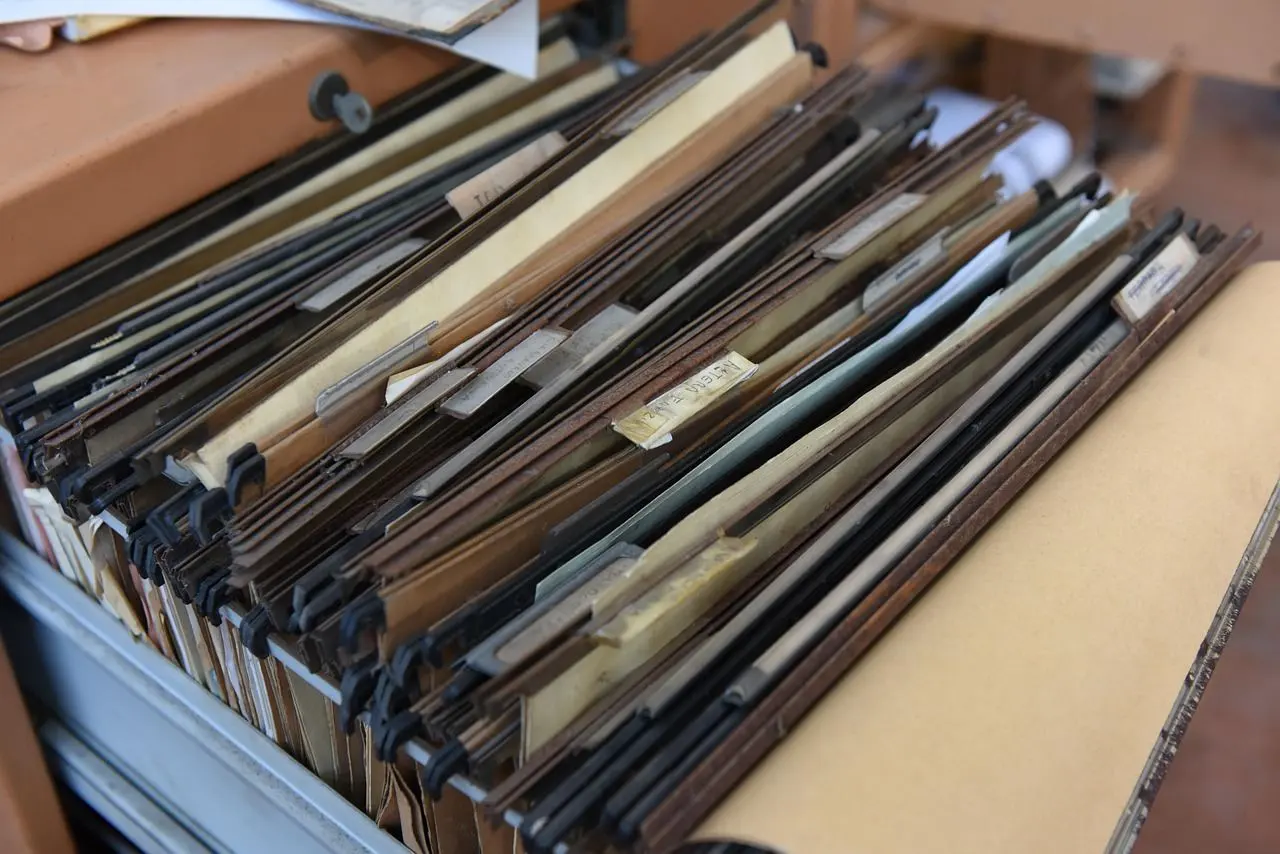
If shelf space is tight, these small space storage ideas show ways to fit a file box into a closet or under a bed.
A yearly routine that keeps paper under control
Pick a fixed point after your return is filed to sweep the files. Move the year’s tax papers into an archive folder, then shred whatever has passed its limit.
Before you shred, remember that the IRS is not the only party with a say. TaxAudit points out that the statute of limitations for other agencies, businesses and individuals, such as creditors, realtors and property holders, may differ from the IRS’s, so check with everyone involved. Its own rule of thumb in the April 2017 post is blunt: when in doubt, do not throw it out.
If the stacks are part of a wider clutter problem, our guide on how to declutter your home covers the rest of the house. For tax questions about your own situation, a qualified tax professional is the right person to ask.
Frequently asked questions
Can I shred my tax papers as soon as tax day passes?
Show answer
Usually not. Kiplinger’s page, last updated 15 March 2026, says the agency generally keeps an audit window of three years, so supporting papers should outlast the filing season.
Is it a mistake to keep papers longer than the minimum?
Show answer
TaxAudit’s April 2017 post says holding documents too long beats disposing of them too soon. The cost is storage space, which a yearly sweep helps manage.
How long do W-2 forms need to stay in the file?
Show answer
Kiplinger says it may be wise to keep them until Social Security benefits begin, because they let you verify your income if something goes wrong. That is longer than the standard filing-record period.
Do the same limits apply to non-tax papers?
Show answer
Not necessarily. According to TaxAudit, creditors, realtors and property holders can work under limits that differ from the IRS’s, so ask those parties before discarding anything tied to them.